
69 Results for "

Magnolia biondii Pamp.

" in MedChemExpress (MCE) Product Catalog:
Products (69)

69 Results for "Magnolia biondii Pamp." in MCE Product Catalog:

7
7 Publications Verification
Cat. No.: HY-N0163
CAS No.: 528-43-8
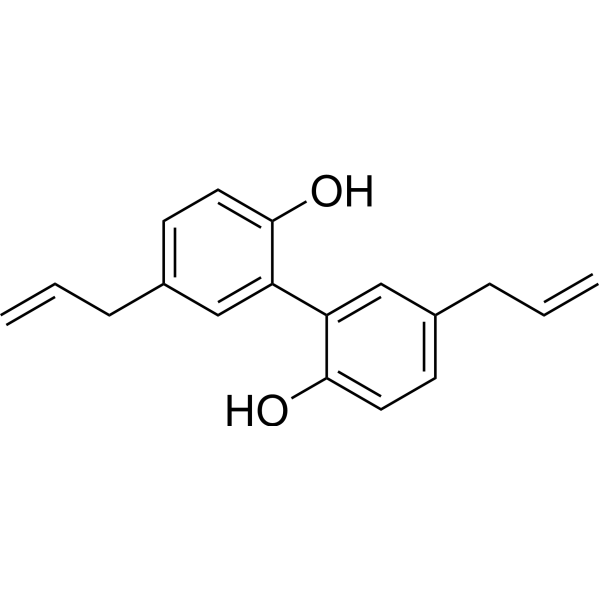
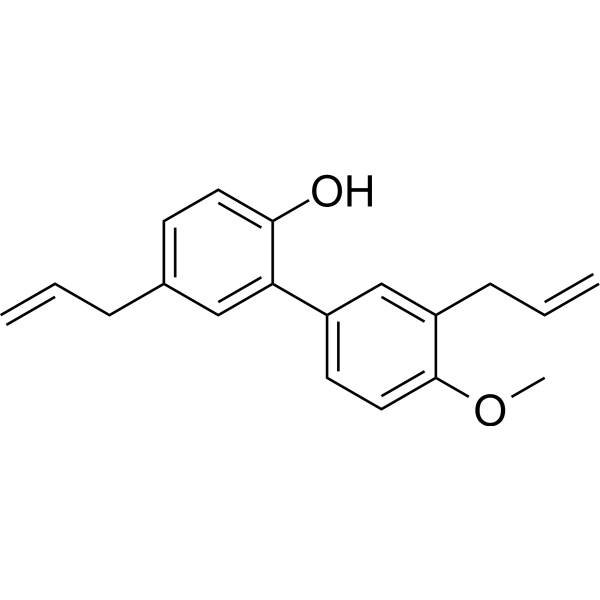
Magnolol, a natural lignan isolated from the stem bark of Magnolia officinalis, is a dual agonist of both RXRα and PPARγ, with EC50 values of 10.4 µM and 17.7 µM, respectively.
4
4 Cited Publications
Cat. No.: HY-N1390
CAS No.: 134-96-3
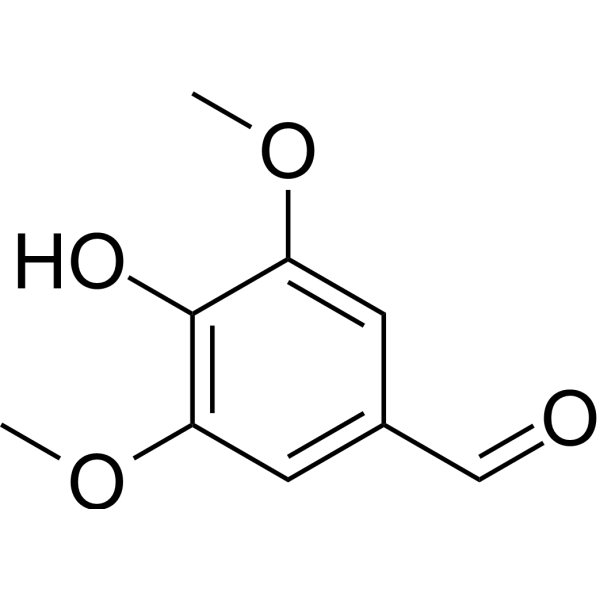
Syringaldehyde is a polyphenolic compound belonging to the group of flavonoids and is found in different plant species like Manihot esculenta and Magnolia officinalis . Syringaldehyde moderately inhibits COX-2 activity with an IC50 of 3.5 μg/mL . Anti-hyperglycemic and anti-inflammatory activities .
2
2 Cited Publications
Cat. No.: HY-P3419
CAS No.: 929905-12-4
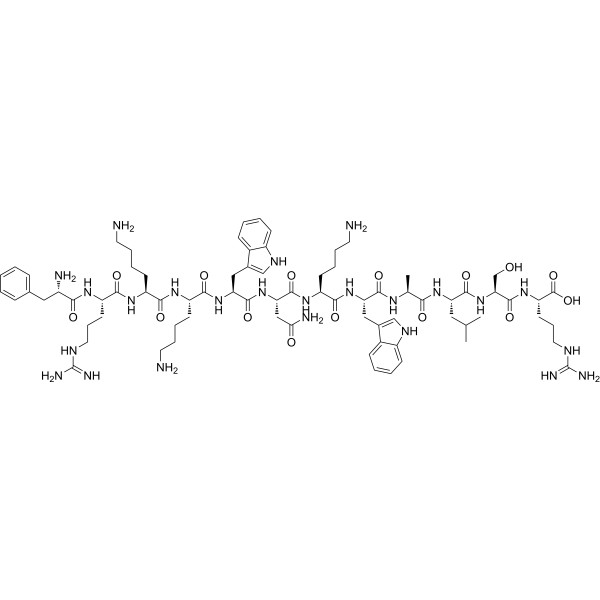
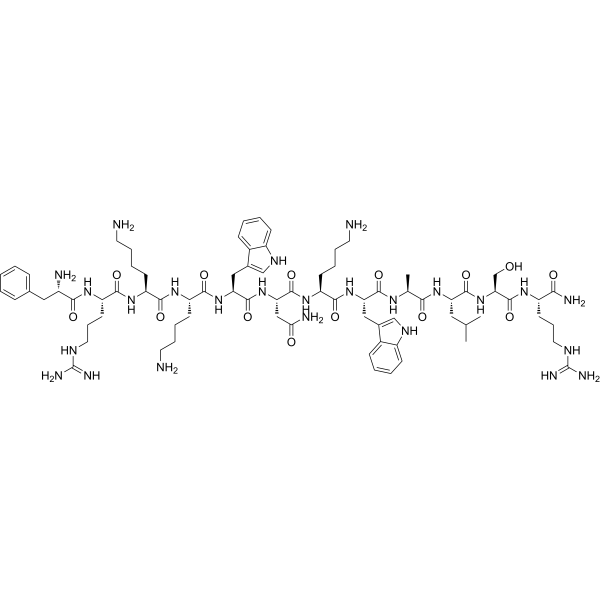
PAMP-12 (unmodified) is an endogenous peptide and is a MrgX2 agonist. PAMP-12 (unmodified) can reduce cAMP accumulation, increase Ca 2+ levels, enhance beta-arrestin recruitment, decrease IP-1, and increases phosphoERK. PAMP-12 (unmodified) can elicit hypotension through inhibiting catecholamine secretion from sympathetic nerve endings and adrenal chromaffin cells. PAMP-12 (unmodified) can be used for the research of hypotension and ulcerative colitis .
2
2 Cited Publications
Cat. No.: HY-N0719
CAS No.: 31008-19-2
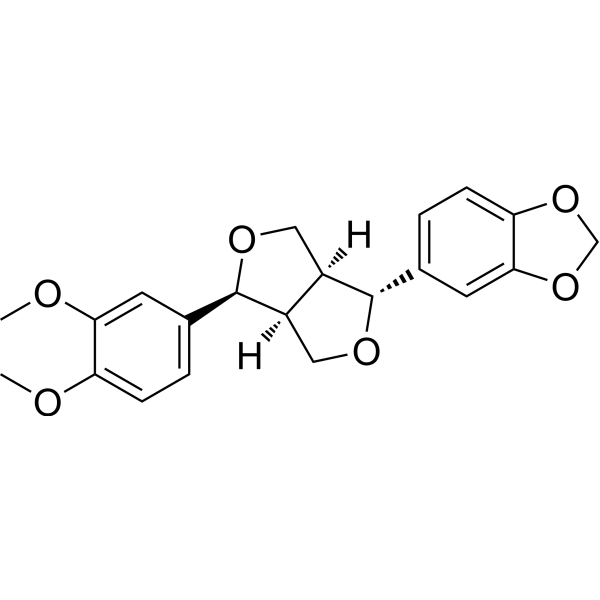
Fargesin is a bioactive neolignan isolated from magnolia plants, with antihypertensive and anti-inflammatory effects .
2
2 Cited Publications
Cat. No.: HY-N1374
CAS No.: 31008-18-1
Magnolin, a major component of Magnolia liliiflora, inhibits the Ras/ERKs/RSK2 signaling axis by targeting the active pocket of ERK1 and ERK2 with IC50s of 87 nM and 16.5 nM, respectively.
1
1 Cited Publications
Cat. No.: HY-D1056H
Synonyms: LPS, from Serratia marcescens
Lipopolysaccharides, from S. marcescens (Serratia marcescens) are lipopolysaccharide endotoxins and TLR-4 activators derived from Serratia marcescens, classified as S-type LPS, which can activate pathogen-associated molecular patterns (PAMP) of the immune system and induce cellular secretion of migrasomes. Lipopolysaccharides, from S. marcescens exhibit a typical three-part structure: O-antigen (O-antigen), core oligosaccharide (core oligosaccharide), and lipid A (Lipid A). Lipopolysaccharides, from S. marcescens induce NF-κB activation in mouse cells via Toll-like receptor (TLR4)/MD-2. The lipopolysaccharides of S. marcescens can induce apoptosis in host immune cells, thereby suppressing the host's innate immunity .
It is recommended to prepare a solution with concentration ≥2 mg/mL. Vortex thoroughly for more than 10 minutes. Due to the adsorption characteristics of LPS, silanized container or low adsorption centrifuge tubes should be used for aliquoting and storage, and mix thoroughly before use.
1
1 Cited Publications
Cat. No.: HY-N8259
CAS No.: 83864-78-2
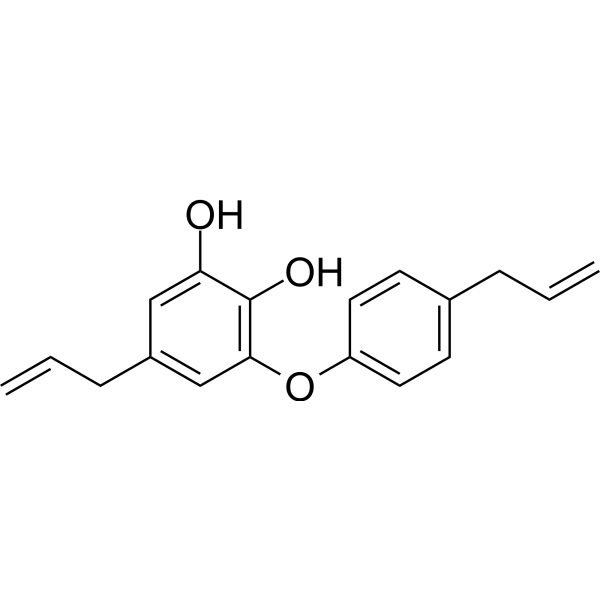
Obovatol is a biphenyl ether lignan isolated from the leaves of Magnolia obovata Thunb .
1
1 Cited Publications
Cat. No.: HY-N5101
CAS No.: 36150-23-9
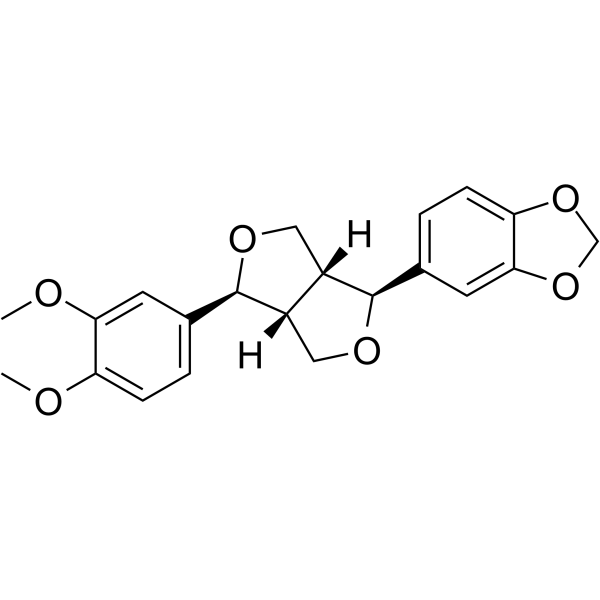
Kobusin is a bisepoxylignan isolated from the Pnonobio biondii Pamp. Kobusin is an activator of CFTR and CaCCgie chloride channels and a inhibitor of ANO1/CaCC (calcium-activated chloride channel) channel .
Cat. No.: HY-D1056A3
Synonyms: LPS, from Escherichia coli (O26:B6)
Lipopolysaccharides, from E. coli (Escherichia coli) O26:B6 are lipopolysaccharide endotoxins and TLR-4 activators derived from E. coli, classified as S-type LPS, which can activate pathogen-associated molecular patterns (PAMP) of the immune system and induce cellular secretion of migrasomes. Lipopolysaccharides, from E. coli O26:B6 exhibit a typical three-part structure: O-antigen, core oligosaccharide, and lipid A, and can be recognized by the core-specific monoclonal antibody MAb J8-4C10. Lipopolysaccharides, from E. coli O26:B6 can promote an increase in pro-inflammatory cytokines in plasma, thereby triggering hypothalamic-pituitary-adrenal (HPA) activation and leading to adrenal oxidative damage. The pathogenic effects of Lipopolysaccharides, from E. coli O26:B6 can be used to construct various models, such as cellular inflammation models, sepsis, acute lung injury models, adrenal dysfunction models, and bladder infection models, etc .
It is recommended to prepare a solution with concentration ≥2 mg/mL. Vortex thoroughly for more than 10 minutes. Due to the adsorption characteristics of LPS, silanized container or low adsorption centrifuge tubes should be used for aliquoting and storage, and mix thoroughly before use.
Cat. No.: HY-P2198
CAS No.: 196305-05-2
PAMP-12(human, porcine) is a major component of immunoreactive (ir)-PAMP, is processed from the adrenomedullin precursor, is a potent hypotensive peptide and participates in cardiovascular control .
Cat. No.: HY-P2076
CAS No.: 931395-42-5
Synonyms: SGX942
Target:  

p62 Bacterial

Research Areas:  

Infection Cancer

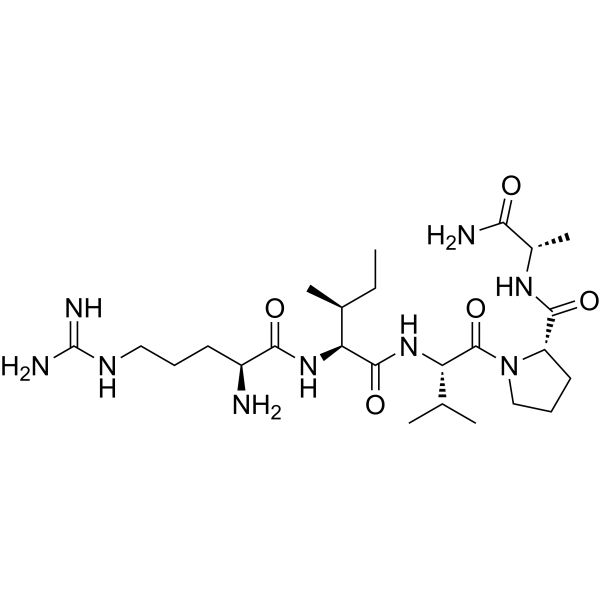
Dusquetide (SGX942) is a first-in-class innate defense regulator (IDR). Dusquetide modulates the innate immune response to both PAMPs and DAMPs by binding to p62. Dusquetide shows activity in both reducing inflammation and increasing clearance of bacterial infection . DAMPs: damage-associated molecular patterns; PAMPs: pathogen-associated molecular patterns
Cat. No.: HY-N2180
CAS No.: 29106-36-3
Synonyms: (+)-Eudesmine
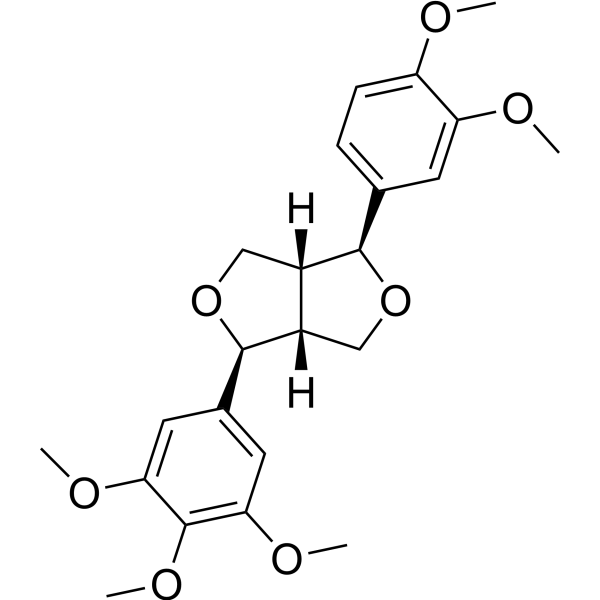
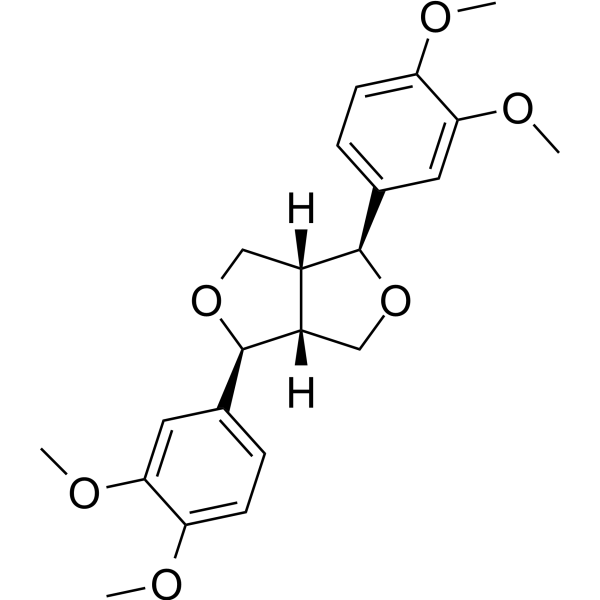
Pinoresinol dimethyl ether ((+)-Eudesmin) is a non-phenolic furanoid lignin. Pinoresinol dimethyl ether can be isolated from Magnolia biondii. Pinoresinol dimethyl ether activates MAPK, PKC, and PKA upstream pathways and inhibits NO levels. Pinoresinol dimethyl ether has neuroprotective activity .
Cat. No.: HY-U00450
CAS No.: 68592-15-4
4-O-Methyl honokiol is a natural neolignan isolated from Magnolia officinalis, acts as a PPARγ agonist, and inhibtis NF-κB activity, used for cancer and inflammation research.
Cat. No.: HY-D1056B4
Synonyms: LPS, from bacterial (Salmonella typhosa)
Lipopolysaccharides, from Salmonella typhosa are lipopolysaccharide endotoxins and TLR-4 activators derived from Salmonella typhosa, classified as S-type LPS, which can activate pathogen-associated molecular patterns (PAMP) of the immune system and induce cellular secretion of migrasomes. Lipopolysaccharides, from Salmonella typhosa exhibit a typical three-part structure: O-antigen, core oligosaccharide, and lipid A. Lipopolysaccharides, from Salmonella typhosa can serve as vaccine adjuvants and demonstrate adjuvant activity targeting B cells in immune responses in vivo .
It is recommended to prepare a solution with concentration ≥2 mg/mL. Vortex thoroughly for more than 10 minutes. Due to the adsorption characteristics of LPS, silanized container or low adsorption centrifuge tubes should be used for aliquoting and storage, and mix thoroughly before use.
Cat. No.: HY-P1831
CAS No.: 150238-87-2
Synonyms: ProAM N20, Human; PAMP-20, human
Proadrenomedullin (1-20), human is a potent hypotensive and catecholamine release–inhibitory peptide released from chromaffin cells. Proadrenomedullin (1-20) inhibits catecholamine secretion in PC12 pheochromocytoma cells (IC50 ≈ 350 nM) by suppressing Na +/Ca 2+ influx and blocking desensitization. Proadrenomedullin (1-20), human specifically acts on nicotinic cholinergic receptors in a non competitive manner. Proadrenomedullin (1-20), human can be used for research on conditions such as hypertension .
Cat. No.: HY-N7512
CAS No.: 6871-21-2
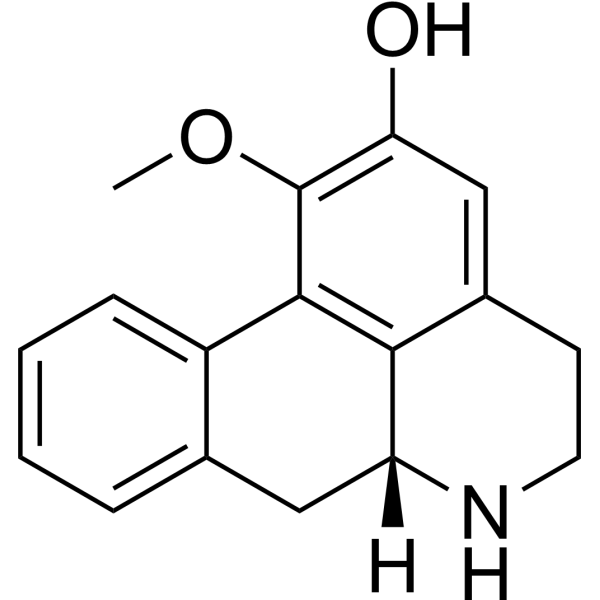
Asimilobine is an aporphine isoquinoline alkaloid isolated from plant species of Magnolia obobata Thun. Asimilobine is a dopamine biosynthesis inhibitor and a serotonergic receptor antagonist. Asimilobine shows an antimalarial and anti-cancer activity .
Cat. No.: HY-D1056C1
Synonyms: LPS, from Salmonella enterica (Serotype enteritidis)
Lipopolysaccharides, from S. enterica (Salmonella enterica) serotype enteritidis are lipopolysaccharide endotoxins and TLR-4 activators derived from the enteritidis serotype of S. enterica, classified as S-type LPS, which can activate pathogen-associated molecular patterns (PAMP) of the immune system and induce cellular secretion of migrasomes. Lipopolysaccharides, from S. enterica serotype enteritidis exhibit a typical three-part structure: O-antigen, core oligosaccharide, and lipid A. Lipopolysaccharides, from S. enterica serotype enteritidis can induce systemic inflammatory responses, increasing levels of TNF-α, IFN-γ, IL-6, IL-10, and nitrate in plasma .
It is recommended to prepare a solution with concentration ≥2 mg/mL. Vortex thoroughly for more than 10 minutes. Due to the adsorption characteristics of LPS, silanized container or low adsorption centrifuge tubes should be used for aliquoting and storage, and mix thoroughly before use.
Cat. No.: HY-126535
CAS No.: 116872-05-0
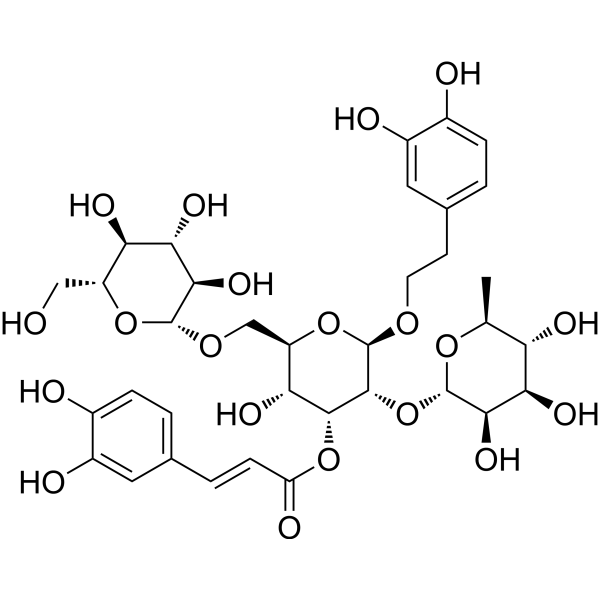
Magnoloside B is an α-glucosidase inhibitor (IC50=0.69 mM), which can be obtained from Magnolia officinalis stem bark. Magnoloside B shows moderate inhibitory activity against MGC-803 and HepG2 cells. Magnoloside B has the potential to study cancer and diabetes .
Cat. No.: HY-D1056B2
Synonyms: LPS, from bacterial (Proteus mirabilis)
Lipopolysaccharides, from Proteus mirabilis are lipopolysaccharide endotoxins and TLR-4 activators derived from Proteus mirabilis, classified as S-type LPS, which can activate pathogen-associated molecular patterns (PAMP) of the immune system and induce cellular secretion of migrasomes. Lipopolysaccharides, from Proteus mirabilis exhibit a typical three-part structure: O-antigen, core oligosaccharide, and lipid A. Proteus mirabilis is a major pathogen causing urinary tract infections and may also contribute to rheumatoid arthritis. Lipopolysaccharides, from Proteus mirabilis also exhibit potential anti-tumor effects, demonstrating in vivo inhibitory activity against solid tumors such as meningosarcoma and Walker carcinosarcoma .
It is recommended to prepare a solution with concentration ≥2 mg/mL. Vortex thoroughly for more than 10 minutes. Due to the adsorption characteristics of LPS, silanized container or low adsorption centrifuge tubes should be used for aliquoting and storage, and mix thoroughly before use.
Cat. No.: HY-P4814
CAS No.: 167699-60-7
Synonyms: Rat PAMP
Target:  

Peptides

Research Areas:  

Others

Proadrenomedullin (1-20, rat) (Rat PAMP) is a polypeptide that can be found by peptide screening. Peptide screening is a research tool that pools active peptides primarily by immunoassay. Peptide screening can be used for protein interaction, functional analysis, epitope screening, especially in the field of agent research and development .

